Different names, similar features. Automotive synergies between different manufacturers are now commonplace. Especially since the advent of electric hybrids, where common platforms and shared technological know-how can cope with an increasingly vibrant and differentiated global automotive market. Among the most solid alliances formed in the land of the rising sun, we find Suzuki's tried and tested fraternity with Toyota, which has brought to light several joint models, in a mutual communion of engines on the one hand and platforms on the other, allowing both to enrich and complete their already wide range of vehicles.
Call it “open space”
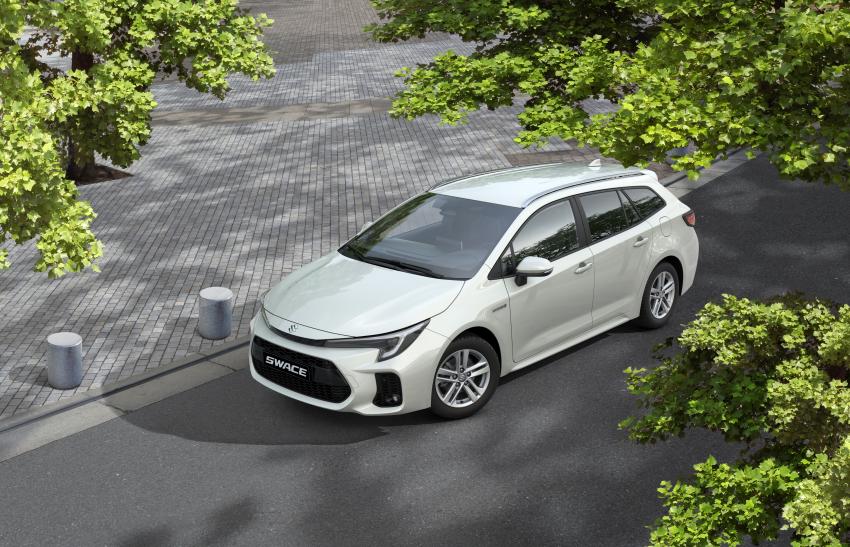
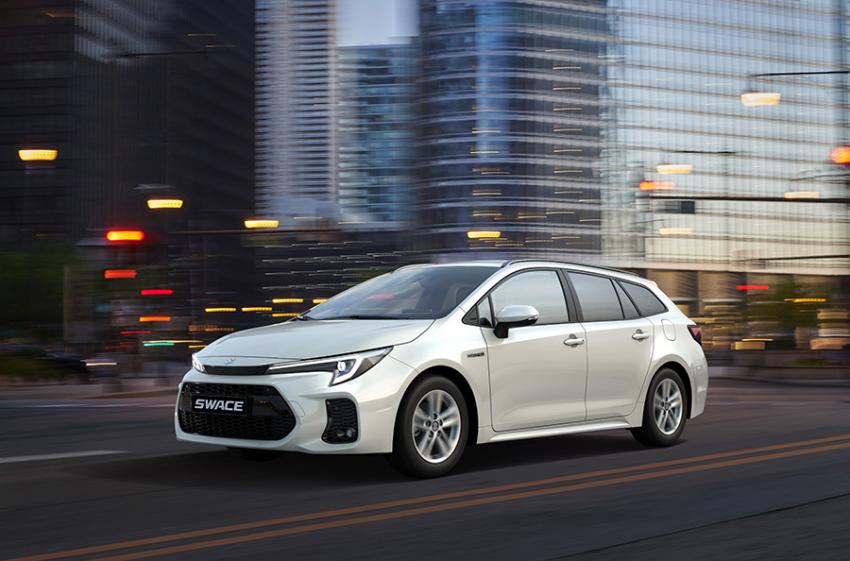
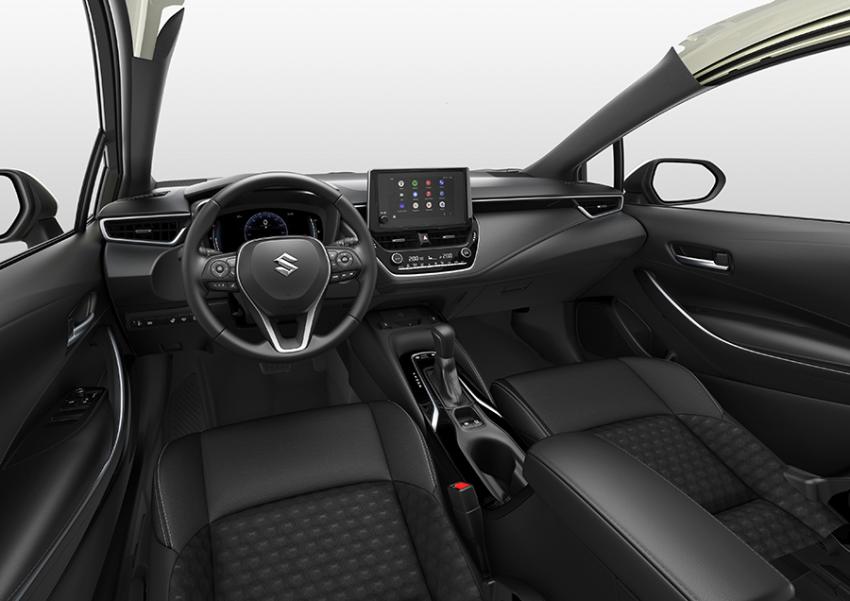
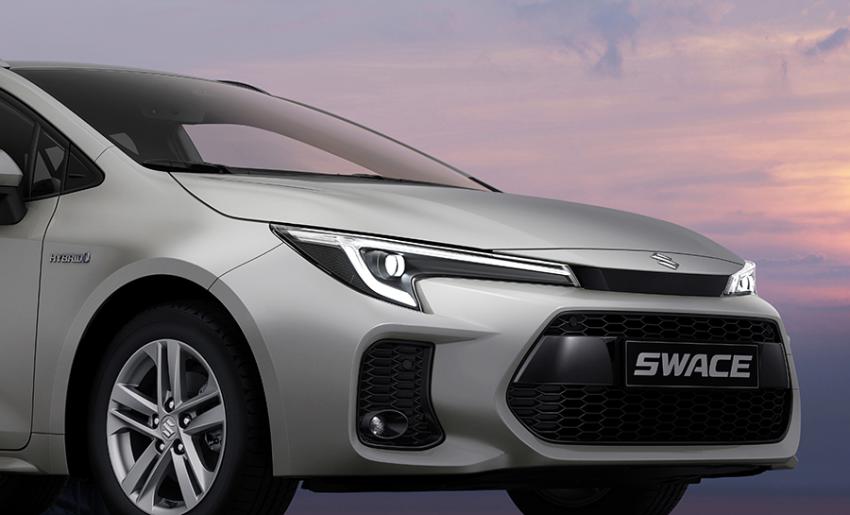
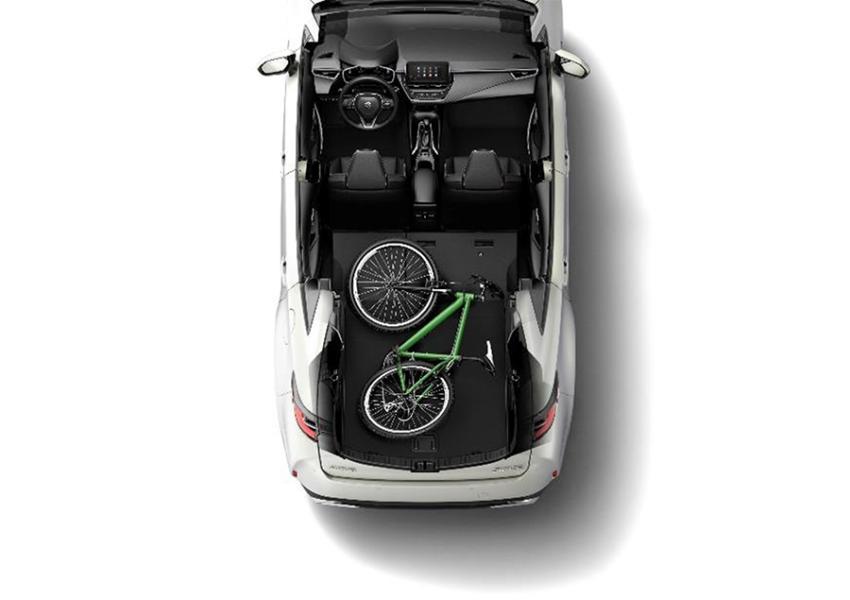
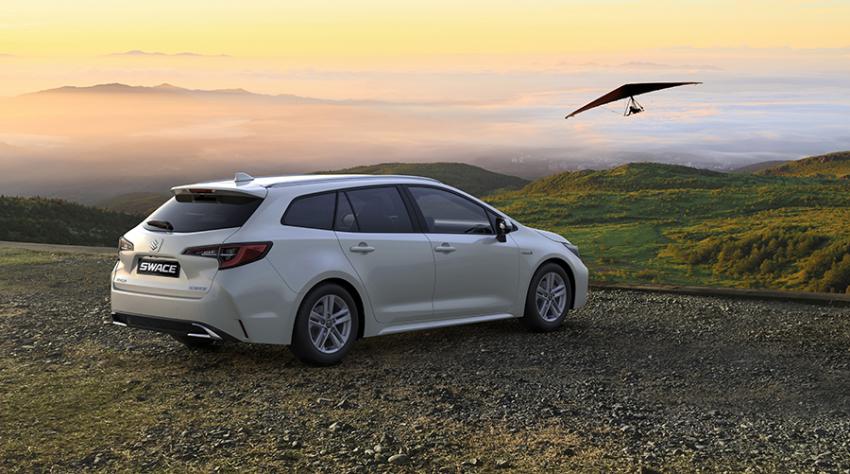
Suzuki, usually more focused on the compact car segments, is extending its range upwards by adding the Swace to the family, built on the TNGA (Toyota New Global Architecture) platform to offer a large station wagon intended exclusively for the European market and closely (very closely) related to the Toyota Corolla Touring Sports, from which it differs only in a few aesthetic details and trim choices. Thus, without wasting resources on competing designs, Suzuki has been able to offer this family flagship from 2021, restyled in 2023 and equipped with a renewed hybrid unit, more eco-friendly and with better performance. With a length of 4.66 metres, a width of 1.79 metres and a roof height of 1.46 metres, the Swace is the largest Suzuki available today. A spacious family-oriented roadster that has been described as “open space”, thanks to a 2.7 metre wheelbase and generous interior volumes able to provide enough room to sit comfortably five passengers, luggage included. The 596-litre capacity of the boot can be increased to 1,606 litres by folding down the 40/60 split rear seat, making it possible to stow bulky bags and sports equipment including a mountain bike loaded horizontally. As mentioned, the body is similar to that of its cousin the Toyota Corolla Touring Sports, with the most obvious difference being the large S logo on the front grille, elongated headlights and special front air intakes. This is followed by a sleek and sporty front end, dominated by a hexagonal grille and honeycomb panel, flanked by bi-led light clusters that create a unique light signature. From here, the sides flow towards the rear door, which is also fitted with LED light clusters in a similar shape to the front. The dynamic and streamlined exterior design is echoed in the sober and functional interior, where the simple lines of the dashboard with a central 8-inch touch-screen display, which provides access to the main on-board functions. An all-digital 7-inch screen replaces the more traditional instruments in front of the driver and can be customised in three colours, with the indicating lights positioned to the driver's preference. As befits a mid-range roadster, the Cool and Top versions offer a high level of comfort with sophisticated features such as dual-zone climate control with occupant detection, heated seats and steering wheel, smartphone connectivity and wireless charging, a full infotainment system with steering wheel controls and LED lighting throughout the interior. All models also feature tinted rear windows, Keyless Go access system, a reversing camera and a full range of Adas assists, including ACC adaptive cruise control with Stop&Go.
Always under control
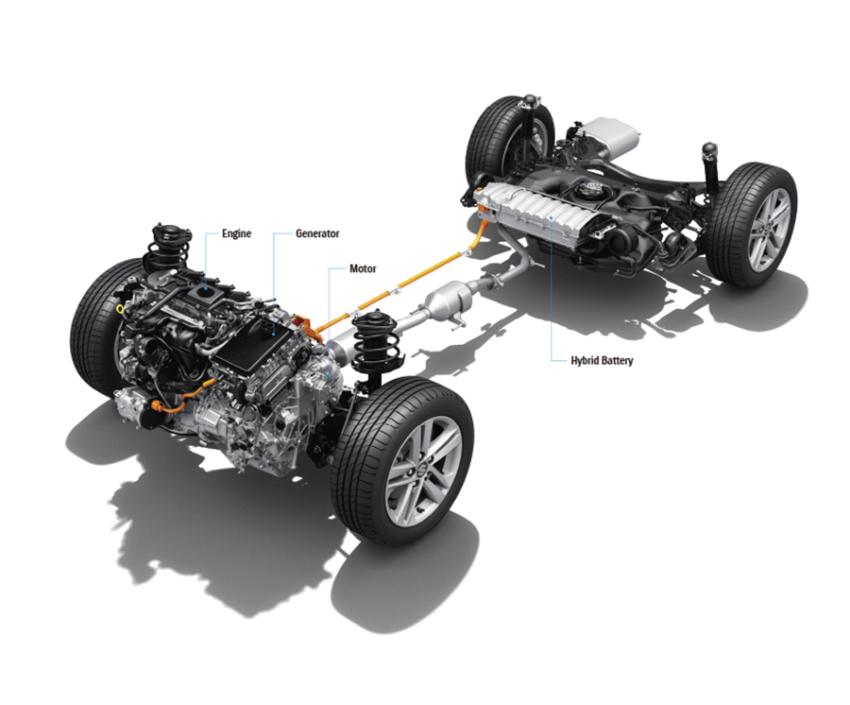
The focus here is not so much on pure speed, which is adequate for this type of car, but on managing ownership costs, thanks to a dual petrol/electric engine capable of reducing fuel consumption and emissions and, when necessary, perhaps in urban areas, running in EV mode. At the heart of Suzuki's hybrid system, which is also borrowed from Toyota, is the well-known 1.8-litre 2ZR-FXE four-cylinder petrol engine with multipoint direct injection and 16 valves, which produces 98 bhp at 5,200 rpm and 14.5 Nm of torque at 3,600 rpm. The ICE unit is flanked by an electric motor and makes up the mild hybrid system with 95 hp and 18.8 Nm of torque, giving a combined output of 140 hp, 15 per cent more than the debut version. This synergy results in a top speed of 180 km/h, acceleration from 0 to 100 km/h in 9.4 seconds, an average fuel consumption of 21.7 km per litre and CO2 emissions between 102 and 104 g/km. The front wheel drive comes courtesy of an E-CVT automatic transmission, whose response is adjusted according to the driving programme selected by the driver, supported by the Esp anti-skid system with Tcs. The Drive Mode Select system offers four driving modes, which can be selected from the central console: EV when one wished to move only using the electric unit; Normal for the best compromise between dynamics and efficiency; Eco for maximum fuel economy; Sport when a more decisive push is needed. A complete set of ADAS systems, as expected in any modern mid-range car, are responsible for automatically correcting or preventing possible dangers, with all the main functions – including the unusual ACA (Active Cornering Assist) to limit understeer when cornering - activated by two cameras, wide-angle front and rear, and a series of sensors to monitor obstacles and nearby traffic. Regenerated by energy recovery systems during braking, as well as directly from the combustion engine, the electric unit is powered by a 207.2 volts 4.0 Ah lithium-ion battery, eliminating the need to search for an external recharging station. The Japanese family car, which weighs 1,475 kg in running order, has a floor pan with four independent suspensions, McPherson at the front and multilink at the rear, brakes managed by a four-disc system with ABS, self-venting at the front, and electrically assisted steering capable of ensuring a turning radius reduced to 5.2 metres. In contrast to the much larger wheel sizes offered by its direct competitors, the wheel come in a single size, designed specifically for the mechanical characteristics of the Swace to improve the footprint, with five 16-inch double-spoke alloy wheels and 205/55 R16 tyres.