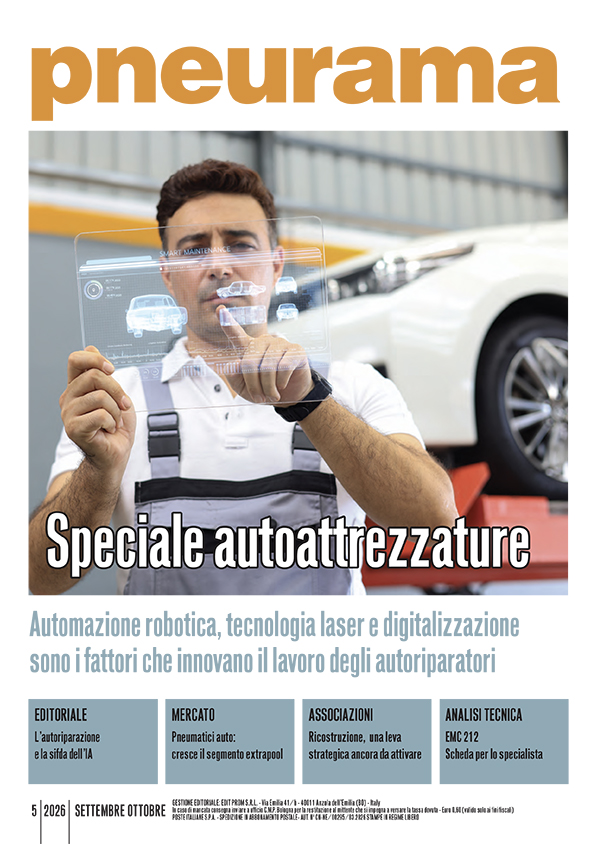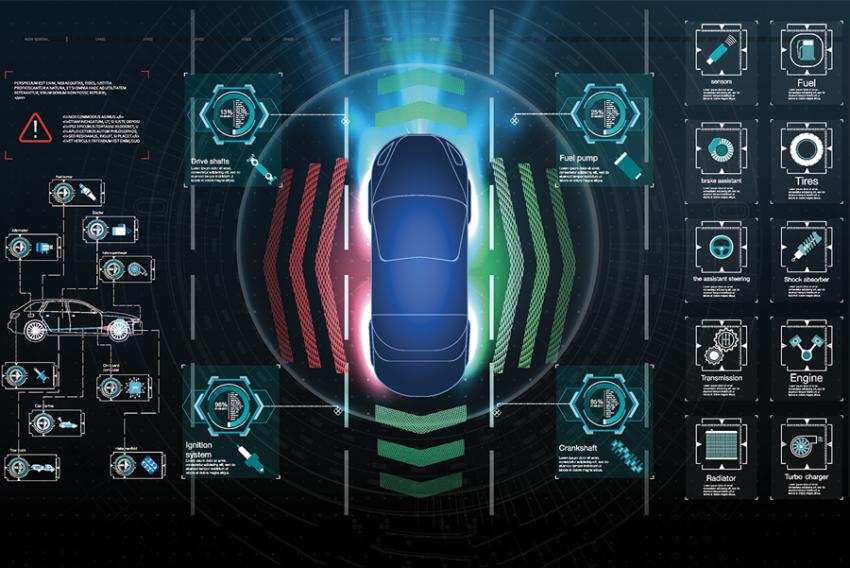
The car is evolving from an industrial product into a technological platform. Vehicles capable of communicating with their occupants, interpreting what is happening around them, making autonomous decisions and anticipating potential faults will become increasingly common. AI will drive the development of the ‘automobile sapiens’, as Fabio Orecchini, director of the Car and Mobility Observatory at Luiss Business School, has termed it. This innovation is, in fact, reshaping processes and skills across the entire automotive industry – including the self-repair sector. In this sector, the digital transformation is profoundly changing the way workshops operate. This is because automotive equipment is no longer simply machinery designed to carry out a specific task: thanks to advanced software, sensors, connectivity and cloud services, it is becoming a node in an ecosystem capable of collecting, processing and sharing information. However, it is with predictive diagnostics that the landscape could take a significant leap forward. For the car repairer, the change would be anything but marginal. Software capable of connecting the vehicle to the workshop would enable a shift from a ‘fix the fault’ model to one based on ‘preventing the fault’. The difference is substantial. A tyre fitter, bodywork specialist or mechatronics technician who receives an advance warning can order the spare part, schedule the work and prepare to tackle the problem even before the car arrives at the workshop. Work thus becomes more organised, timely and, at least in theory, more efficient. But it is precisely here that certain issues arise which the sector cannot afford to underestimate. The first concerns investment. ‘Smart workshop equipment’ requires capital, software updates, connectivity and training. The risk is that the technology will become a cost that smaller workshops will struggle to sustain unless it is accompanied by a clear return on investment. Then there is the issue of interoperability. A truly connected workshop requires that equipment, management systems, databases and diagnostic platforms are able to communicate with one another. Closed systems or those unable to share information risk creating new inefficiencies. No less important is the issue of expertise. Software can suggest a procedure, flag an anomaly or generate a forecast, but it cannot automatically transform an operator into a qualified technician. The challenge for the automotive repair sector is to find a way to balance the use of technology with the value of human expertise. The workshop of the AI era may be more productive, predictive and profitable, but only if innovation is introduced with clear objectives, sustainable investment and suitably trained staff.