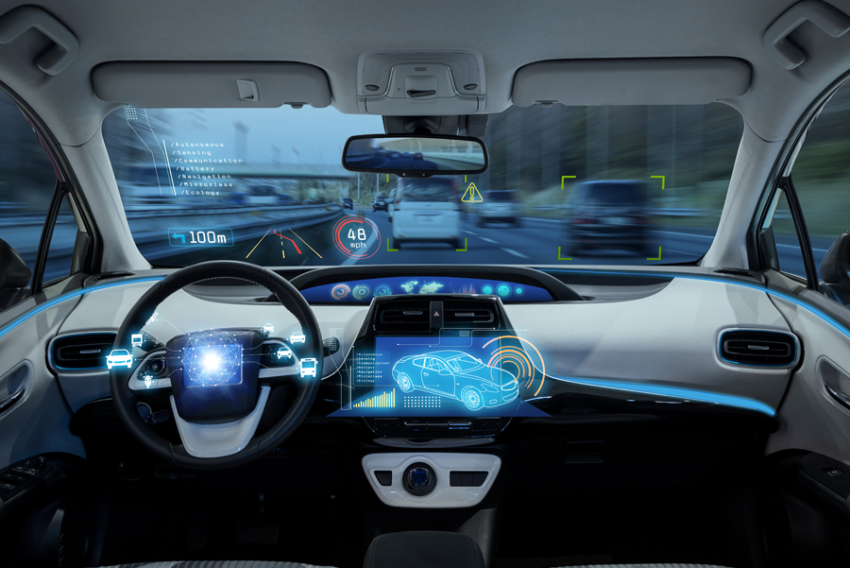
The evolution of the automobile toward self-driving vehicles still seems a long way off, yet technologically it is very close. These are the authoritative words of the Luiss Business School’s Auto and Mobility Observatory, which recently published a study on the topic, officially presented for the first time during the Futuremotive Talks event held in May in Bologna. The very recent signing by 18 European Union member states of a declaration of intent aimed at paving the way for the testing of self-driving cars in Europe further confirms this reality.
The signatories of this declaration of intent—including Italy—therefore welcome Commissioner Tzitzikostas’s proposal to accelerate the regulatory developments necessary to enable cross-border testing, and thus to develop self-driving vehicles more rapidly and in a harmonized manner across the EU. While this declaration of intent appears aimed at preventing these self-driving vehicles from being developed exclusively on other continents—leaving Europe behind—there is also a significant aspect of political will, which becomes clearer thanks to the Luiss Business School report. In fact, the report identifies the “critical issue of liability” as one of the key challenges that must be resolved through political intervention, since—to quote the study—“reducing industry’s exposure to risk is the key to making automation-enabled transportation services feasible.” In other words, if the risk of any electric vehicle accident—and the cost of such an accident—rests entirely on the vehicle manufacturer’s shoulders, the manufacturer is unlikely to be willing to develop and bring autonomous mobility solutions to market. I, too, believe that policymakers must take a more active role on these issues to ensure that road safety, environmental protection, and free competition continue to be safeguarded, along with the industrial capacity of European automakers. But we’re not talking about future action: the foundations for safe autonomous mobility must be laid today, because the foundations for autonomous driving are, in fact, already present in today’s vehicles. To be clear, I am referring to ADAS.
Now standard in all new vehicles regardless of their powertrain, these automated driver-assistance features incorporate systems and operating principles that rely on on-board sensors to facilitate driving and, in the case of active ADAS, intervene to prevent driving behaviors that the system identifies as potentially dangerous. ADAS systems represent the most impactful technological innovation in terms of road safety, and it’s important to remember that their effectiveness depends largely on the proper functioning of the onboard sensors and the vehicle’s integrated computers; without both of these elements, it would not be possible to obtain the necessary data or perform the calculations quickly enough to decide whether or not to activate a particular feature. This holds true for ADAS as well as for the most advanced autonomous vehicles, which—even under the best conditions—can only match, but not exceed, the behavior and safety level of an experienced and attentive human driver. In fact, to return to the excellent work conducted by LUISS, “none of the technologies tested—even when they function exceptionally well—has been experimentally proven to prevent many types of traffic accidents.” The fact that this functional dependence—in both autonomous vehicles and ADAS systems—on onboard sensors and complex software should highlight the need for external verification, to prevent cars from operating with sensors that have lost their calibration over time, or sensors no longer in their original position—perhaps due to vibrations from a rough road surface or minor collisions—or with corrupted control software, perhaps resulting from a botched maintenance procedure or an over-the-air update interrupted by entering a tunnel.
The problems described above may seem like very rare occurrences, but the truth is that, as of today, we do not know whether the number of vehicles on the road with uncalibrated or misaligned sensors—or with corrupted software that prevents ADAS from functioning properly—is one in a million, one in a hundred, or one in ten. To date, there is no mandatory ADAS verification system in place, and therefore no relevant data that would allow us to assure the public whether a vehicle is operating safely or is, in fact, a moving hazard waiting for a moment of inattention or an unfortunate coincidence to cause an accident. This situation, in which ADAS systems are not inspected, certainly does not allow for the building of the relationship of trust between industry, public authorities, and citizens that is necessary in a democratic society to enable risk-sharing. Currently, there is a system known as “mandatory vehicle inspections” that verifies whether a vehicle meets the requirements for safe operation—for example, whether a vehicle’s low-beam headlights are properly aligned or whether the braking system is effective when activated. Including a check of the functionality and efficiency of ADAS systems—which, as we recall, will be mandatory for all vehicles sold from 2024 onward—in these inspections would not only improve road safety for vehicles on the market today. If policymakers wish to help the European industry bring autonomous vehicles onto our roads, establishing a fully operational, independent system—based on external monitoring tools—that periodically reviews their road safety functions would make it much easier for autonomous vehicles to operate on public roads and would help share the resulting risk of accidents.