Efficiency and versatility with the new Goodyear Fuelmax Endurance
The new Goodyear range has been specially developed to obtain on secondary routes the same fuel savings typically obtained on motorways without sacrificing mileage and traction

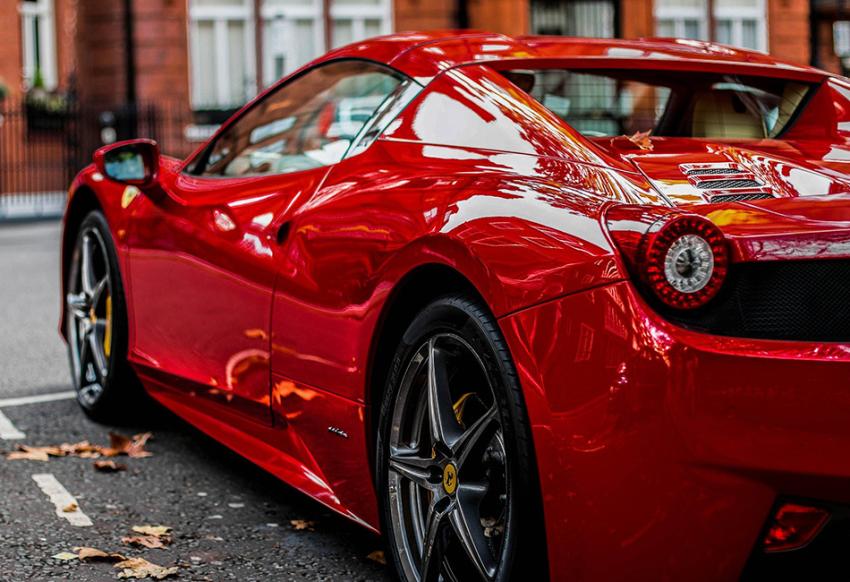
Among all the tire sectors for automobiles – and related components – high performance tires have experienced a relentless growth in recent years and could soon surpass regular tires in sales. A significant trend worth exploring. It does seem that the average power output of cars is on the increase, partly due to hybridization. BMW's new sports SUV, the XM Plug-in Hybrid, is expected to have 750 horsepower, 200 of which coming from the electric motor alone.
 But even conventional ICE engines are now able to produce a level of output that would have been unthinkable 15 years ago: 3-litre engines can easily reach 500 hp (Maserati's new Nettuno engine boasts 630 hp), while 2-litre engines can easily exceed 300 hp, Maserati's 4-cylinder mild hybrid engines are the perfect example of this. All this power must be unloaded on the ground and a reliable solution, in addition to electronic wizardry and mechanical devices of all kinds, must include 4 beautiful high-performance tires, wide and low profile. Therefore, sporty tires, let's say with 17-inch wheels and a V speed rating (240 km/h) or higher, are becoming increasingly popular. EVs, which are significantly powerful and heavier than most vehicles, also contribute to this trend. Fiat’s little 500 Electric can mount 17-inch wheels with 205/45 low-profile tires, while the more powerful Ford Mustang Mach-E comes with a set of 245/40R21 while the more placid Peugeot 208 electric can go up to 18-inch wheels.
A great driving force
 This trend is nothing new, in fact back in 2017 Smithers Rapra estimated that the compound annual growth in value of performance tires would be in the region of 6.3% from 2017 to 2022, up from the 5.8% already recorded during the 2012-2017 period. It is interesting to note that volume growth - 6.1% annually - through 2022 was expected to be stable compared to the 2012 - 2017 period, a sign that the average value of tires was expected to increase. This widespread adoption of high-performance tires as original equipment has significant repercussions also in the aftermarket and this means that motorists who are not so concerned with pure performance might feel somewhat disappointed when faced with the cost of replacing these tires and look for alternatives that are more focused on comfort and mileage than driving precision and grip in challenging conditions. However, the tire dealer will have to make it clear for the driver that if a car is equipped with tires with a Z speed rating, it will not be possible to fit tires with lower ratings, such as H or V, but it will be necessary to maintain the original equipment ratings or move to higher codes. Furthermore, cars are often sold with summer tires and if these are large and low profile, in certain conditions they could behave differently from what the driver is used to. In addition, crossovers and SUVs often put more stress on the tires which could wear faster than the same tires mounted on coupes and sedans.
Large wheels for all segments
 We have to admit that 4-season tires have evolved in a direction that increasingly manages to reconcile performance with comfort and mileage despite the sporty features thus representing a good compromise if one does not live in areas with extreme climates. Dealers should consider that average wheel sizes are increasing. Renault’s Scenic family has 20" wheels as standard, and several coupes go as high as 22/23 inches. It may also be useful to find out the tire sizes of the best-selling cars to get an idea of what to keep in stock and current trends are clearly pushing in favour of high-performance tires. Equally important is to take into account the rapid growth of hybrid and electric vehicles, with many new high-performance models ready to hit the market. And if these cars are also SUVs and/or crossovers, then the tires in question will have to cope with significant weights and power and, at the same time, guarantee the smoothest ride possible so as not to reduce the vehicle’s mileage. EVs must be treated with due attention because even a small hybrid like the Toyota Yaris has 170-volt lithium batteries. The various types of electric cars - Mild, Full and Plug-in hybrids - have spread rapidly in this two-year period, thanks to government incentives and growing environmental awareness linked to the Covid-19 pandemic. The result is that at the end of 2021, the 900 thousand units registered in 2020 should be confirmed. Quite a mixed group ranging from the small Panda and 500 mild hybrids to the mighty Maserati Levante and Ghibli, Porsche Cayenne, BMW and Mercedes hybrids up to the Porsche Taycan and Tesla Model X, overpowering electric cars weighing well over 2 tons. Many of these were purchased by scrapping vehicles that were 10 years old or more and no longer in need of a tire change.
A niche? Possibly, but a significant one
 Among the factors that can lead to success in the high-performance tire market, besides keeping up to date with current production sizes, is knowing the customer. Many dealers think that high performance tires, being a small percentage of the business, are unimportant. Looking at it from a different perspective one can conclude that high-performance vehicle drivers are likely to be experts and enthusiasts with a keen eye for driving characteristics. Being able to fully satisfy their needs and tastes gives the tire dealer the opportunity to stand out and appeal to a numerically limited but very interesting number of consumers, also because dealing in quality products with high added value could potentially generate a fruitful word of mouth from a commercial point of view. Talking about high-performance tires, Future Market Insights estimates a 10.9% compound annual rate growth between 2021 and 2031, and the global market will total $29.32 billion/year by 2031, compared to the $9.4 billion in 2020 and an estimated $10.4 billion in 2021. The U.S. is expected to dominate the North American market in this sector, alone accounting for approximately 81.5% of total sales in 2021. Furthermore, still according to estimates, Germany, home to many top automotive companies, will account for 17.9% of total performance tire sales in Europe by 2031. Sports cars will emerge as the most lucrative segment, worth $11.360 billion by 2031. Focusing on the sales channels it seems that the aftermarket will lead the segment, accounting for more than 76% of global sales up to 2031. The survey also underscores the important role of other segments such as motor racing (with a multitude of minor championships across Europe and thousands of drivers), which must replace tires after every race - or nearly every race – which will expand the business volume for the aftermarket in this specific market niche. The growing number of small and medium-sized businesses in both developing and western countries will also increase the fleet of pickups and similar vehicles, and this is increasing the demand for high-performance tires also in this segment.
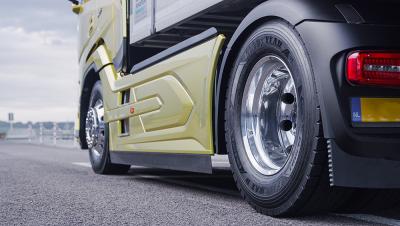
The new Goodyear range has been specially developed to obtain on secondary routes the same fuel savings typically obtained on motorways without sacrificing mileage and traction
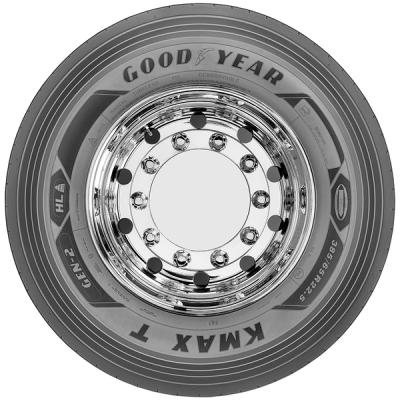
The RH-4A+ is an OTR tire designed for large vehicles while the Kmax T Gen-2 is intended for long distance transport fleets
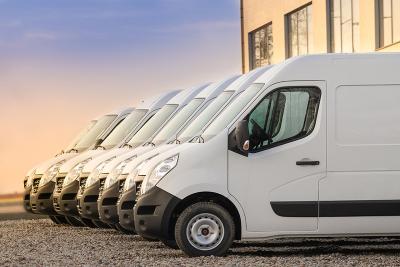
The e-commerce segment is expanding rapidly and door-to-door deliveries needs to adapt to rapid changes: Goodyear supports logistics businesses and seeks to cater for their needs and requirements.